…and I’m not sure what to replace it with.
It’s finally happened – the large cork belt running bow to stern above the waterline is coming off (it’s one hell of a rubbing strake). When I first inspected Dowager, the belt was the first thing I knew would have to be entirely replaced. Weeds were growing from it in various places, and the calico covering was falling apart. But I can’t delay the removal work anymore – it has to be dismantled.
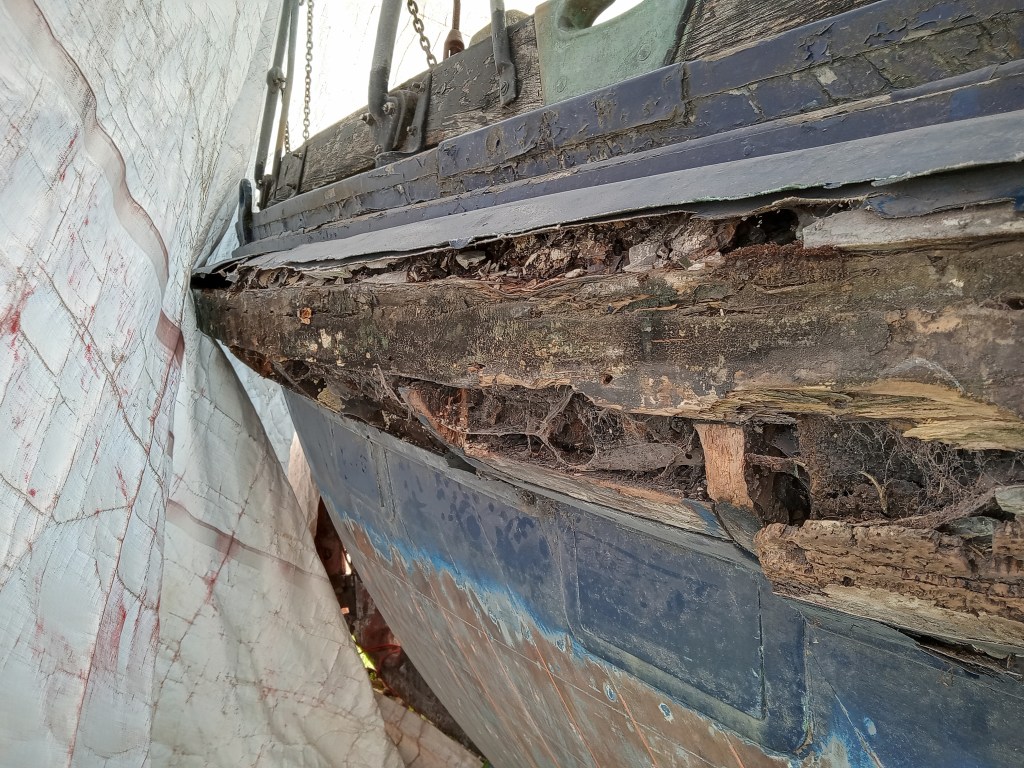
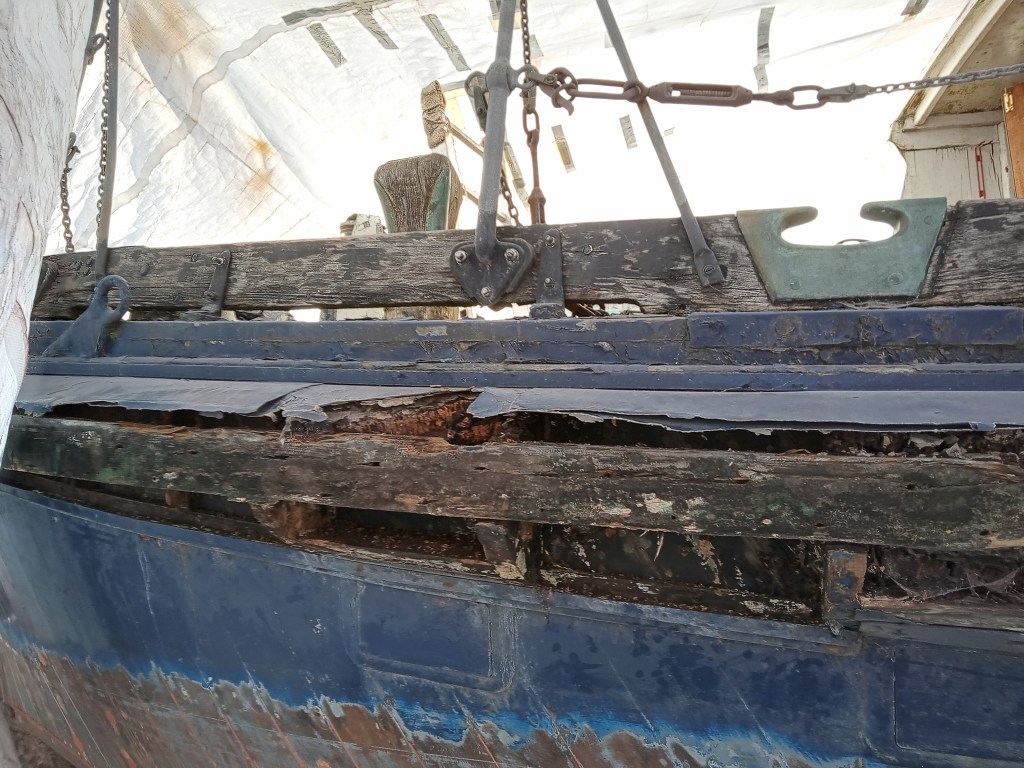
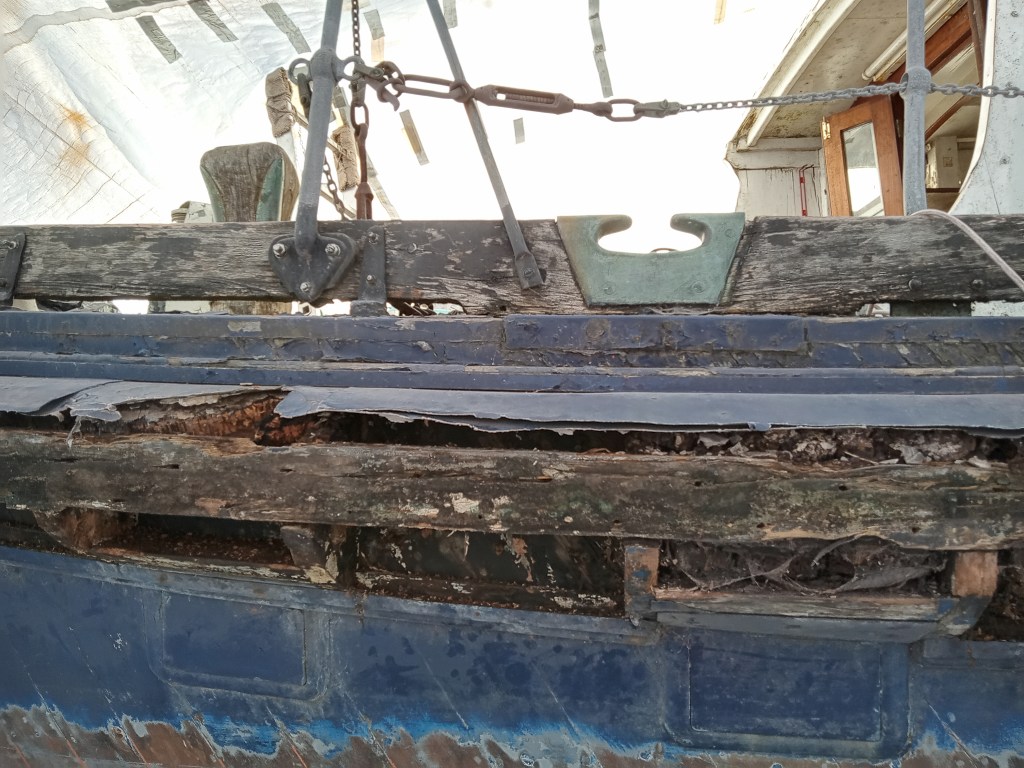
This is because a lot of water has been trapped in the cork for a significant time, causing rot and damage to the hull behind it. I’ve already found a few soft spots, and most of the belt’s oak framework has decayed so badly that it’s hard for me to get a template of each component.
Fortunately the damage to the hull hasn’t (so far) been full thickness, so a routing tool may be all I need to repair it.
When it comes to replacing the belt itself, I’m thinking of leaving it ‘open’ i.e. only replacing the framework and foregoing any cork or cork-like material. This would remove any risk of water getting trapped between the hull and the belt, unseen, unknown until something becomes obvious (such as more weeds suddenly sprouting up).
Obviously one drawback to this is it might ruin the boat’s lines from an aesthetic perspective. A smooth, graceful bund would be swapped for a more soviet-style rail. I’m currently in two minds as to which path to take. If I do decide to go the whole hog and replace like for like – cork and calico – I also need to find a supplier. So far, all the cork suppliers I’ve contacted only provide thin marine cork for decking, whereas I’d need cork sections thicker than a Yorkshireman’s club sandwich.
Since most of the world’s cork is produced in Portugal, I’ve started looking there (unfortunately not literally), and I’m getting a good idea on prices for large blocks of the stuff – after all, I need to consider the cost of all this too.
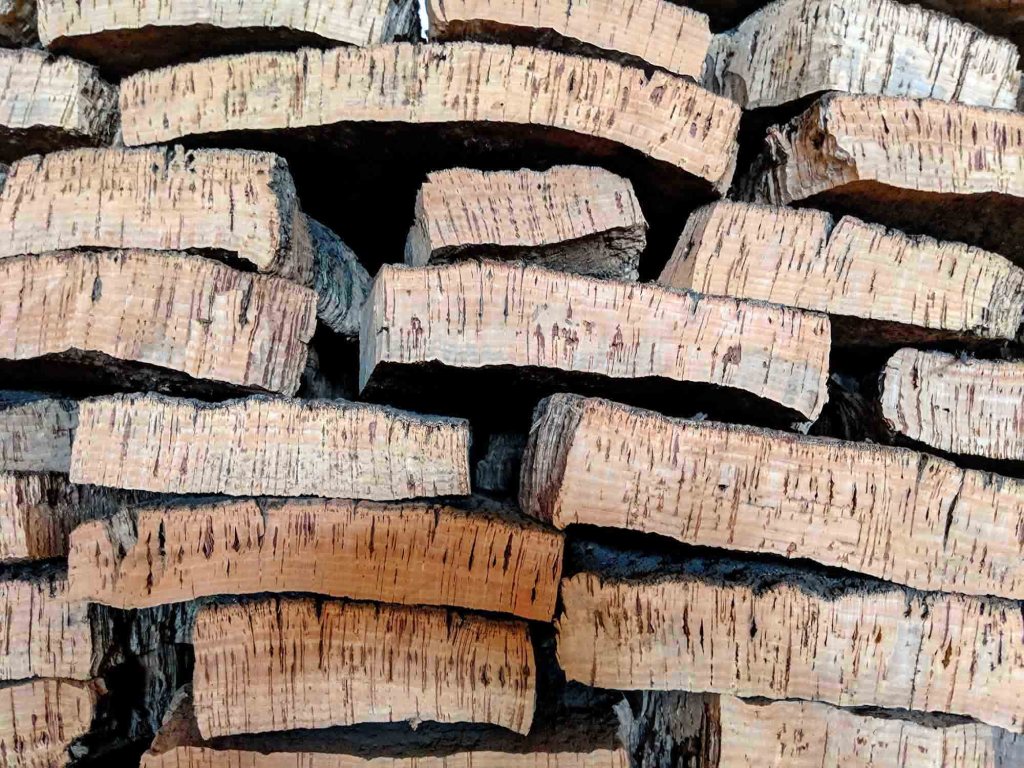
On a straight choice between natural cork or a synthetic material like insulation foam, it’s hardly a contest – cork is a sustainable, high quality material that is naturally resistant to rot and bacterial growth. It is also incredibly durable and impermeable to water. While synthetic materials are cheaper, lighter, slightly easier to shape, and theoretically maintenance-free.
But that all comes later – right now I need to finish stripping away the existing belt before stabilising the hull behind it. Once that’s done, I can rebuild the oak frame and decide what to fill it with (if anything).
Until next time, stay safe,
Tim
 DOWAGER
Leave a comment