Operation Dynamo
“I have myself full confidence that if all do their duty, if nothing is neglected, and if the best arrangements are made, as they are being made, we shall prove ourselves once more able to defend our island home, to ride out the storm of war, and to outlive the menace of tyranny – if necessary for years, if necessary alone.”
Winston Churchill
Until the second world war came along, the port town of Dunkirk was a rather unremarkable dot on a map of France. Up to this point, its greatest impact on the world had come via the French author Alexandre Dumas, who had made it one of the settings in his book; The Man in The Iron Mask. Fate however would sweep aside all its past events in the fires of a military crucible so monumental that the very word Dunkirk is no longer just a place – it’s become an adjective. For it was at this little port town where during a handful of days across May and June 1940, the fate of the world would hang in the balance. Nothing short of the future of Western democracy and freedom was at stake.
Courage, audacity, acts of incredible heroism, and plain old luck.
As far as war stories go, this one had it all. And it began in a shroud of defeat as two allied armies fell back in the face of a resurgent German onslaught hellbent on…
The Fall of France
May 1940.
After months of tense expectation in what became known as the ‘phoney war’, elite German forces of the Nazi war machine are finally unleashed to invade their old enemy, France. Striking at French lines through the Ardennes Forest, fast moving Panzer units bulldoze their way over unspoilt countryside to split apart the allied forces of Britain and France. This is Blitzkrieg; ‘Lightning War’.
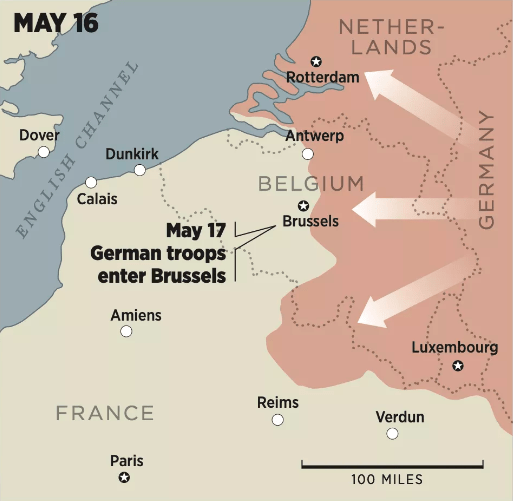
Just months before, following Germany’s invasion of Poland, Britain had sent over 400,000 soldiers of the British Expeditionary Force (BEF) across the channel to bolster their French ally against the German threat. But now, both nations’ armies are on the run, harried every step by the Luftwaffe whose dive bombers blast apart vital road and rail networks, slowing their desperate retreat to the coast.
Despite some heroic rearguard fighting, it becomes clear the only hope for the BEF’s survival is a miracle escape back across the channel to Dover where they can live to fight another day. The retreat soon becomes chaotic; vehicles that run out of fuel are left abandoned on the roadside. Artillery pieces that can no longer be transported are spiked and left for scrap.
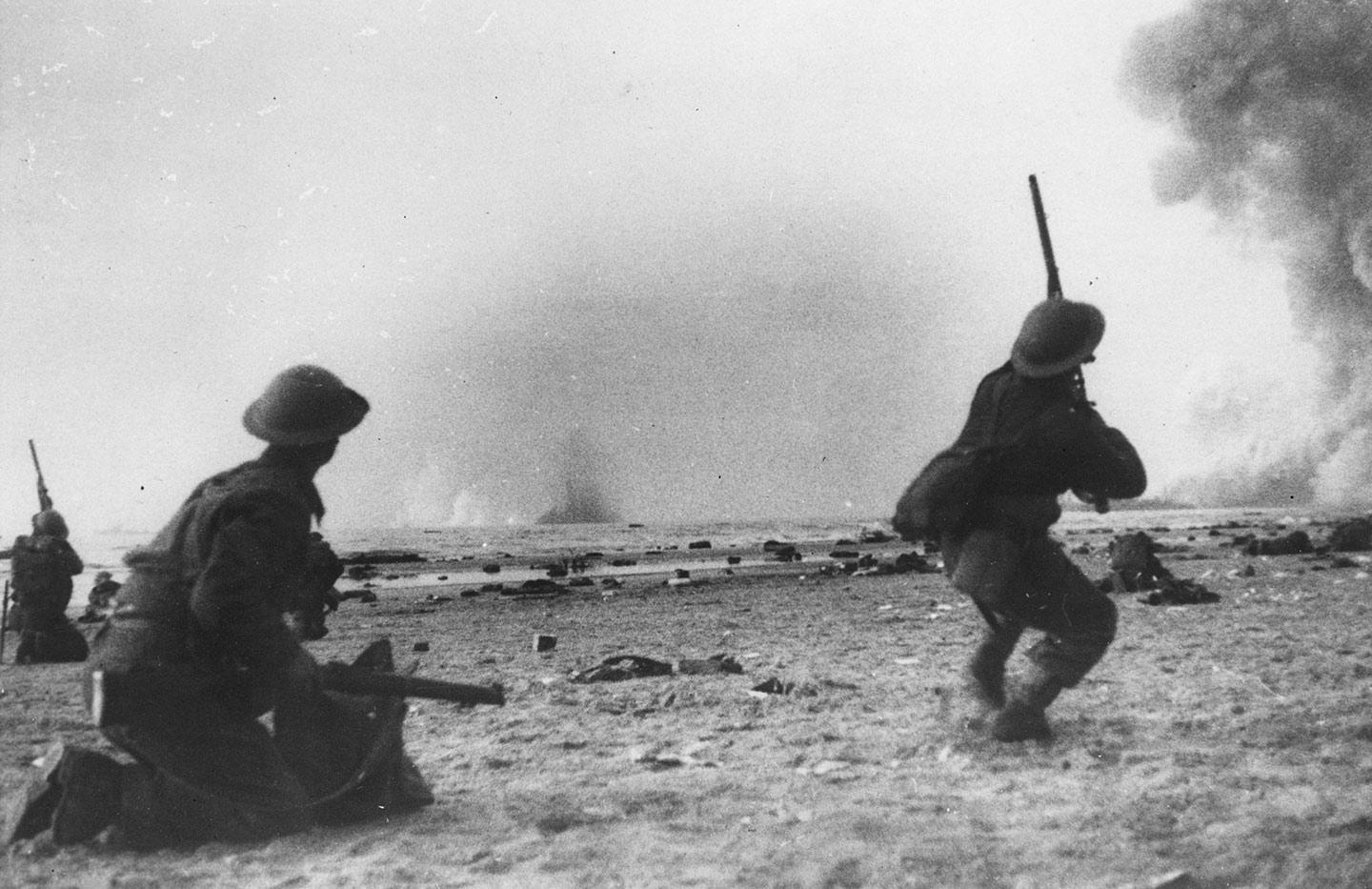
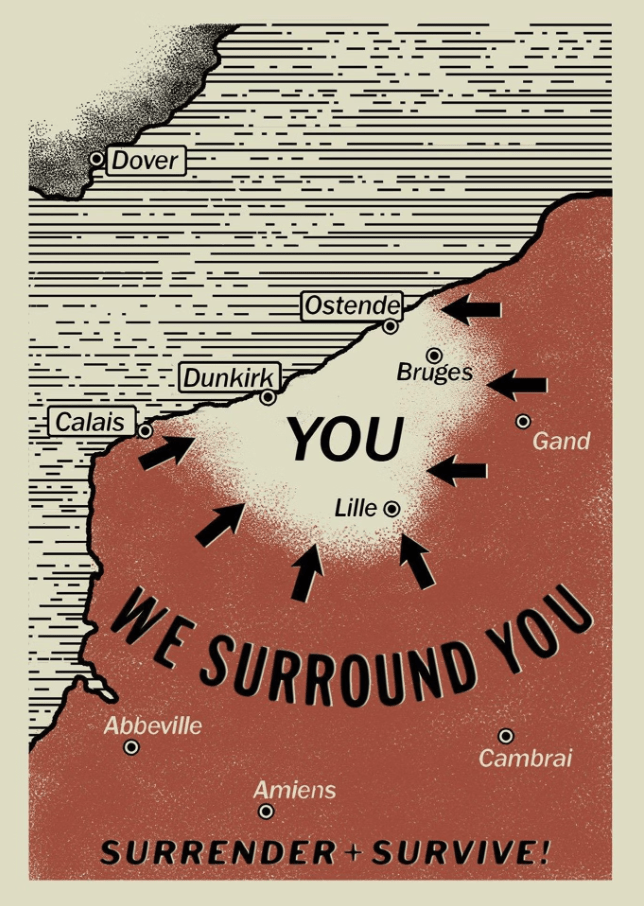
Meanwhile, Hitler’s army tightens its stranglehold on France in its bid to cut off any hope of escape for the fleeing allies. Scrambling for the coast, the exhausted BEF makes it to the Port of Dunkirk where the men do their best to dig-in on a wide, yellow-sand beach, almost within sight of home. But they are surrounded by 2.5 million German soldiers who only have to stand and watch as their air force pounds their enemy towards obliteration at the shoreline.
The Evacuation Begins
The BEF is in an impossible situation. Trapped on all sides with its back to the sea, its young men endure constant strafing and bombing runs from the air while the Royal Navy begins a hurried evacuation from the port. British Prime Minister Winston Churchill drafts a speech for the House of Parliament in which he states only 45,000 men might be saved. But not all is lost. Deep in the Dover cliffs within a fortified bunker, Vice Admiral Bertram Ramsay of the Royal Navy directs a well-planned operation to evacuate as many as possible back to England. The code-name given to this Herculean effort is Operation Dynamo.
Even before the BEF faced a direct threat in France, a call had gone out across Great Britain for all owners of self-propelled pleasure boats between 30 and 100ft long to register their vessels with the admiralty. Any thoughts of using such unsuitable craft to make a potential journey into hostile waters was at that stage more of a contingency than a viable option. But having commanded a destroyer to patrol the coast of Belgium in World War One, Vice Admiral Ramsay knows every scrap of coastline along Northern France like the back of his hand. This detailed knowledge, his remarkable administrative skills, and his ludicrous work ethic make him the perfect man to be responsible for such an audacious plan.
Working for nine days straight, Ramsay and his staff keep Churchill updated from their bunker beneath Dover Castle while they reform the navy into a massive evacuation force.
Operation Dynamo is a Go
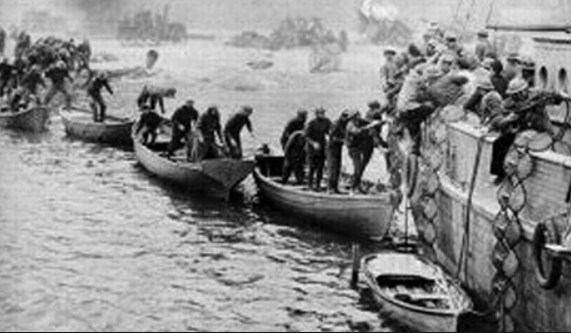
All the while, the beleaguered British army is being slaughtered on Dunkirk beach as remaining French forces stage a courageous last stand to divert as many German troops from Dunkirk as possible. At this desperate moment, Operation Dynamo is now sprung into action, and the Royal Navy begins commandeering all registered vessels from across the country. Practically overnight, these little boats are slipped from their moorings, often without their owners’ knowledge, and sailed to the coast of France by makeshift crews.
A lifeboat called Rosa Woodd and Phyllis Lunn (renamed Dowager in 1973) is one such vessel that is commandeered by the Royal Navy, and it is during this time that she sails from her RNLI boat-shed in Shoreham to the Port of Dunkirk to take part in the evacuation.
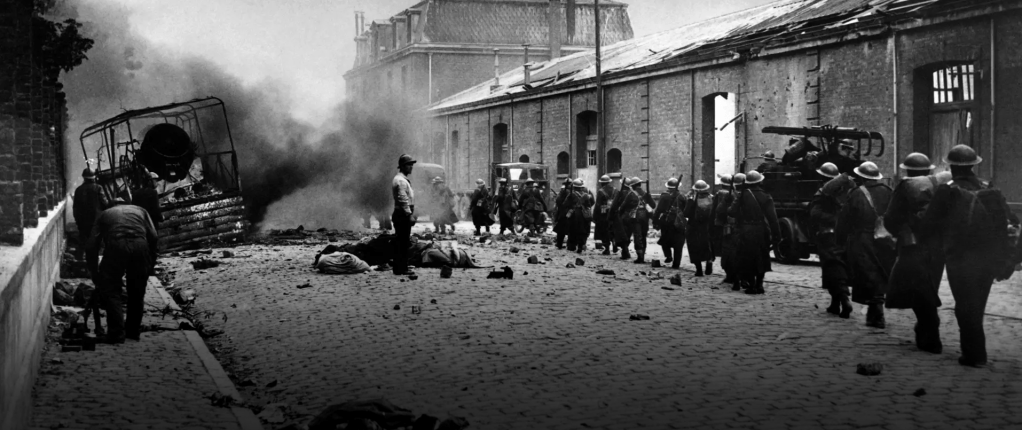
By this point, many men of the BEF have been surviving on the beach for two days without food, water or sleep. The vital harbour has already been destroyed by German bombers, and whilst its oil silos burn, the men of the British army turn to their last hope for escape; a single breakwater extending out to the sea, known as a harbour mole. Little more than a narrow collection of stone and concrete boulders resembling something like a pier, it provides a rudimentary platform for Royal Navy ships to come alongside and begin taking men who form a packed queue on the breakwater, desperate to get home.
With nerves stretched to breaking point, others begin walking into the sea towards a distant flotilla of little ships with rifles grasped above their heads as water reaches their chests. The beach has a slight gradient, making it impossible for the larger warships to get close enough to take men directly from the shoreline. But for many of the shallow-bottomed vessels commandeered by the navy, they’re perfect for the job. And it’s these vessels that now sail dangerously close to the beach, drawing the attention of Luftwaffe pilots who rain bombs and bullets as their crews haul men aboard from neck-deep water.
The Evacuation Becomes a Miracle
An unspoken system soon comes into effect over the coming hours and days; hundreds of small civilian vessels shuttle men directly from the beach and offload them to waiting destroyers of the Royal Navy. And while strategy is seemingly on the German side, the weather bats for Britain; deteriorating conditions makes dive-bombing almost impossible. Coupled with belching smoke from the destroyed harbour, poor visibility for German pilots also makes low-level flying too dangerous. Although attacks on the exposed British army by the Luftwaffe don’t end, this slight reprieve gives the men a much needed breath.

The same can’t be said for Luftwaffe attacks on the Royal Navy, and on 29th May, the destroyer, HMS Grenade, is sunk. The destroyers Jaguar and Verity are badly damaged but manage to escape Dunkirk harbour before they too can be destroyed. By 30th May, all British Divisions are behind the Dunkirk defensive lines, along with half the French army.
Of the hundreds of little boats pressed into service, the Rosa Woodd and Phyllis Lunn, along with other motor lifeboats, proves herself to be amongst the most useful. Her relatively good speed, stability and capacity makes her ideal for ferrying evacuees, and her log shows three separate trips taken to Dunkirk during the evacuation. Despite Operation Dynamo not being publicised across Britain for fear of it becoming a disaster and shattering morale at home, word spreads like wildfire, and many weekend sailors join the effort. Commanding all manner of vessels from speedboats to fishing trawlers, this ‘Dad’s Navy’ makes the hazardous crossing into what must seem like hell on earth. Columns of black smoke fill the air, bombs come crashing down, and smashed warships clog the sea lanes. All the while, burning oil from sinking ships spreads over choppy water, and anti-ship mines become a very real threat. And although the number of men they manage to rescue is a relatively small fraction, their patriotic actions through the dark days of evacuation become known as The Dunkirk Spirit.
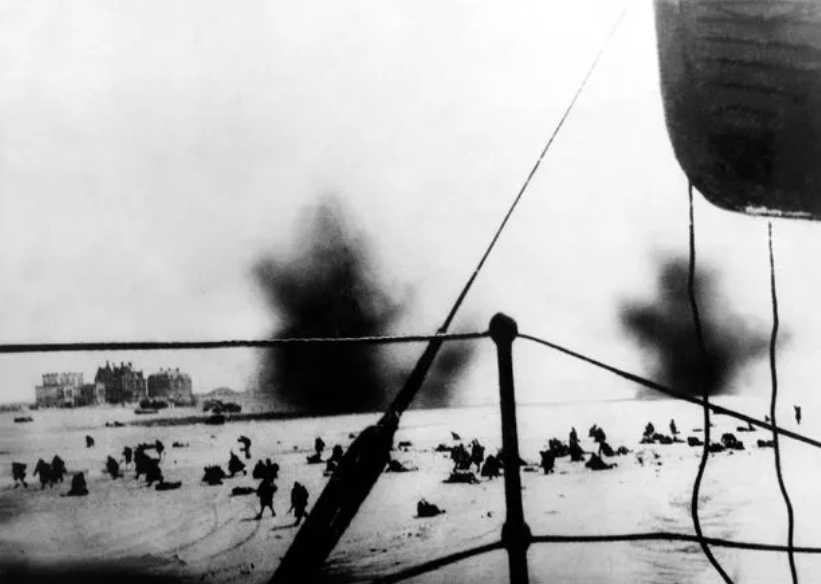
On 1st June alone, almost 65,000 men are successfully evacuated from Dunkirk beach until improving weather conditions signals the return of Luftwaffe attacks. From now on, daylight evacuations are too dangerous to attempt, and the operation becomes limited to nighttime hours. Nevertheless, the remaining British rearguard of 4,000 men are evacuated by 3rd June before focus switches to their French ally, now exhausted from the bitter fighting they’ve maintained to keep the German forces at bay. By 4th June, 75,000 French soldiers are rescued before the operation finally draws to an end.
Aftermath
Contemporary experts, and Winston Churchill himself, believed a number of 45,000 was a realistic expectation to deem the operation a success. In actual fact, thanks to meticulous planning, efficient organisation, jaw-dropping bravery and sheer guts, more than 338,000 soldiers were rescued from Dunkirk between 26th May and 4th June 1940, where they were brought home to a grateful nation.
It is hard to understate the importance of Operation Dynamo to the course of human history. If the majority of the BEF had been annihilated or captured by German forces at Dunkirk, it is highly possible that Britain would have reached a settlement with Hitler, and withdrawn from the war entirely. And without the Island fortress of Britain to use as its springboard into Europe, an isolationist America may have turned its back on a continent in sole possession of the Nazis for years to come.
As events transpired, the successful rescue allowed Winston Churchill to plan future operations for the intact British army to strike back at Hitler in North Africa. More importantly, it allowed him to tell America, the World, and his own people; ‘we aren’t done just yet.’
 DOWAGER